Gelcoat Restoration in South Florida.
Bring oxidized, chalky gelcoat back to a deep, swirl-free, like-new gloss.
Our multi-step gelcoat restoration process removes oxidation, fading, water spots and surface defects, then seals the finish so the gloss lasts. We work on hulls, transoms, decks, hardtops and any gelcoat surface.
About our gelcoat restoration service
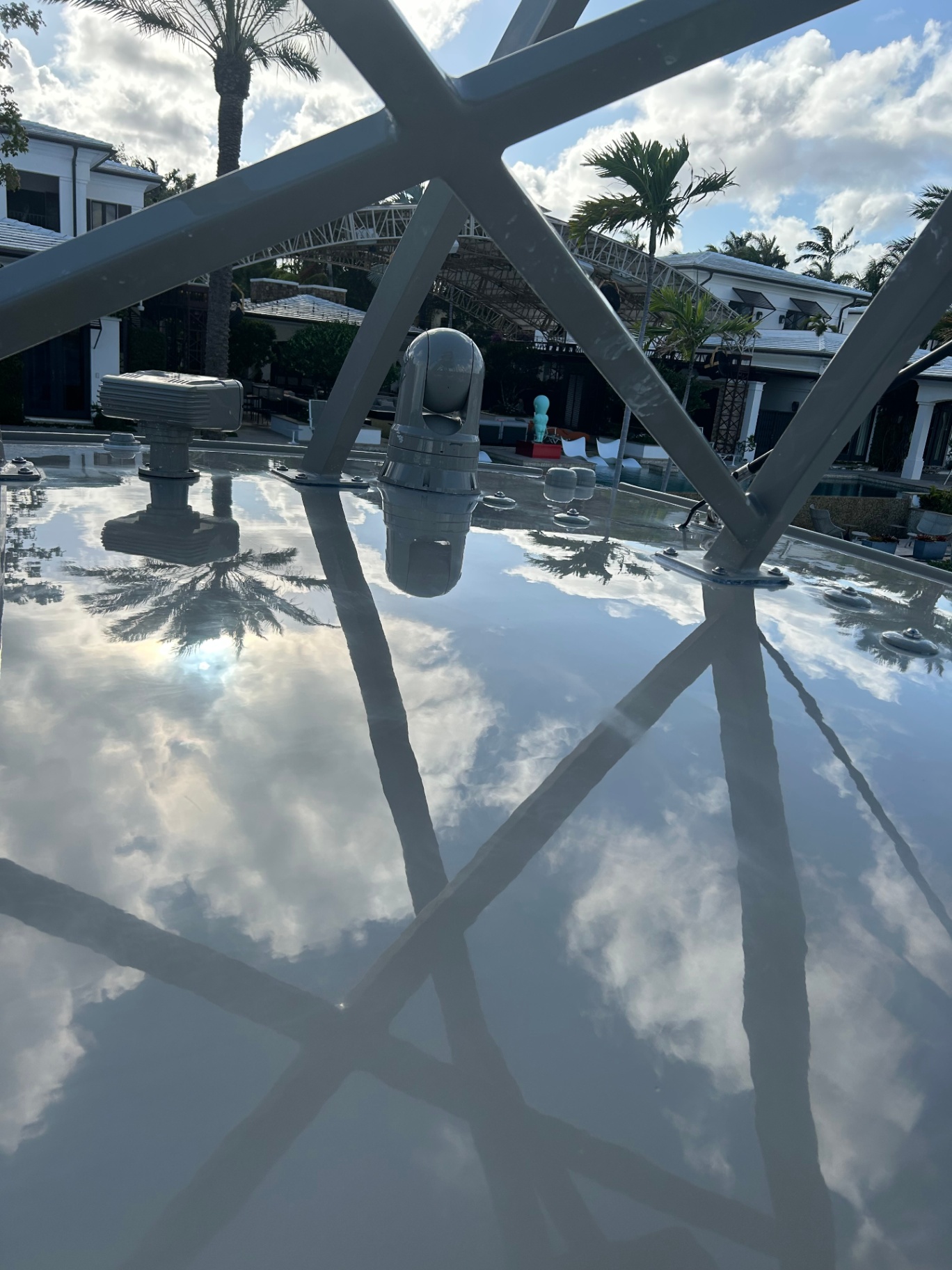
Gelcoat is the thin pigmented resin layer that gives a fiberglass hull its color and gloss. In South Florida — where UV intensity, salt air and dock-line abrasion attack every exposed surface — gelcoat oxidizes faster than almost anywhere else in the country. The result is the chalky, dull, sometimes pink or brown surface most owners eventually see on the hull, hardtop and transom.
AC Detailing's gelcoat restoration is a true multi-stage correction process. We start with a thorough decontamination wash to remove salt, soot and bonded contaminants, then work through a controlled series of marine compounds and polishes — finishing with a fine refining pad that removes the haze left by the compounding stage. For severely oxidized boats we may begin with a controlled wet-sand at 2000–3000 grit before compounding to recover gloss that would otherwise be unreachable.
Every restoration is sealed at the end of the job. Depending on the package, that means a quality marine sealant, a ceramic-infused sealant, or a true marine ceramic coating. Sealing the gelcoat protects the investment, slows the return of oxidation, and makes the next year of washdowns noticeably easier.
What's included
- Multi-stage compound, polish and finish system
- Removes oxidation, chalking and UV fade
- Restores up to 95% of original gloss
- Sealed with marine-grade ceramic for long-term protection
- Hull, transom, hardtop, deck and superstructure
- Safe for thin and aged gelcoat with film-thickness checks
Our gelcoat restoration process
- 1On-board assessmentWe evaluate oxidation level, gelcoat thickness and any prior repairs, then recommend a 1, 2 or 3-stage correction with photos so you know exactly what you're paying for.
- 2Decontamination washTwo-bucket wash with marine soap and an iron / fallout remover, followed by clay-bar on the hull sides to pull bonded salt, soot and dock dust out of the gelcoat.
- 3Correction stagesHeavy compound for oxidation removal, mid-cut polish for clarity, and a fine refining polish to chase out haze and micro-marring. Wet-sanding is added only when needed.
- 4Sealant or ceramic coatingThe corrected surface is panel-wiped and sealed with the protectant matched to your package — sacrificial wax for the budget tier, marine ceramic for long-term protection.
- 5Quality control walkthroughWe meet you (or your captain) at the boat under the same lighting conditions, walk every panel, and only invoice when the finish is signed off.
- Older fiberglass yachts with visible chalking or fading
- Pre-sale prep where gloss directly affects valuation
- New-to-you boats heading into a long-term maintenance plan
- Hulls with heavy waterline staining and oxidation
- Starke Yacht Care marine compounds
- Starke Yacht Care marine polishes
- Starke Yacht Care premium marine wax (sacrificial protection option)
- Starke Yacht Care marine ceramic coatings
- Foam, microfiber and wool pads matched to defect level
Frequently asked about gelcoat restoration
How long does gelcoat restoration last?+
With a ceramic seal and routine maintenance washes, a full gelcoat restoration typically holds its gloss for 12–24 months in South Florida sun. Without a ceramic, expect to refresh annually with a polish-and-wax.
Can heavily oxidized hulls really be restored?+
Yes. As long as the gelcoat has remaining thickness, our wet-sand and compound systems can recover a deep, reflective finish on hulls that look beyond saving. We measure film thickness before any wet-sanding to keep your gelcoat safe for the future.
Is gelcoat restoration the same as buffing?+
No. Buffing is a single step that can mask oxidation temporarily. Restoration is a multi-stage correction that removes the oxidized layer of resin, recovers true gloss, then seals the surface so it lasts.
Do I need ceramic coating after gelcoat restoration?+
Not strictly required, but strongly recommended. Without a long-life sealant the South Florida sun starts re-oxidizing exposed gelcoat within months. A ceramic coating typically pays for itself within one season in protected gloss and easier washdowns.
Can you restore gelcoat on the hardtop and deck?+
Yes. The same multi-stage approach is applied to hardtops, helm pods, decks and non-skid edges with the appropriate pads and protection for foot-traffic surfaces.
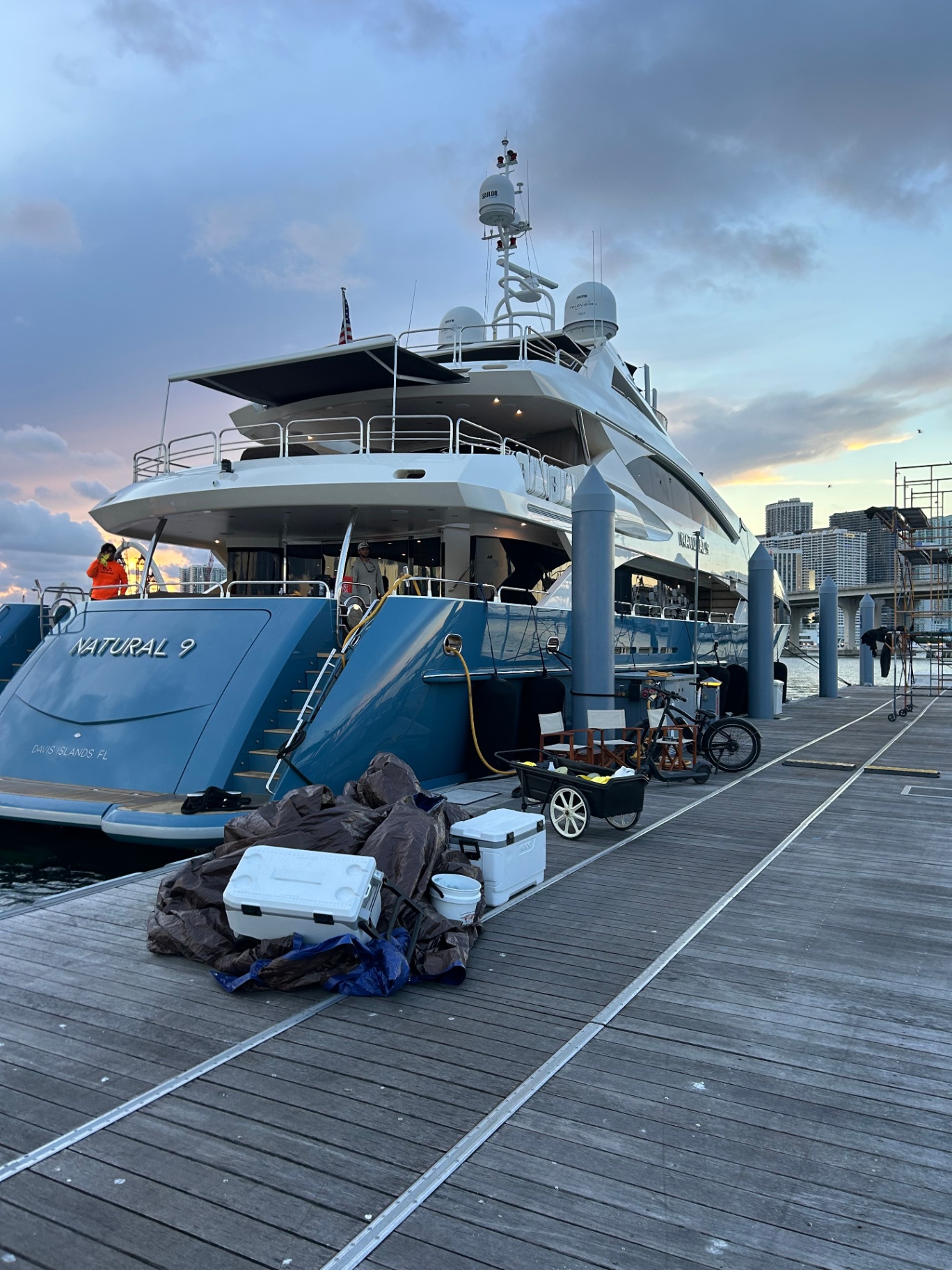
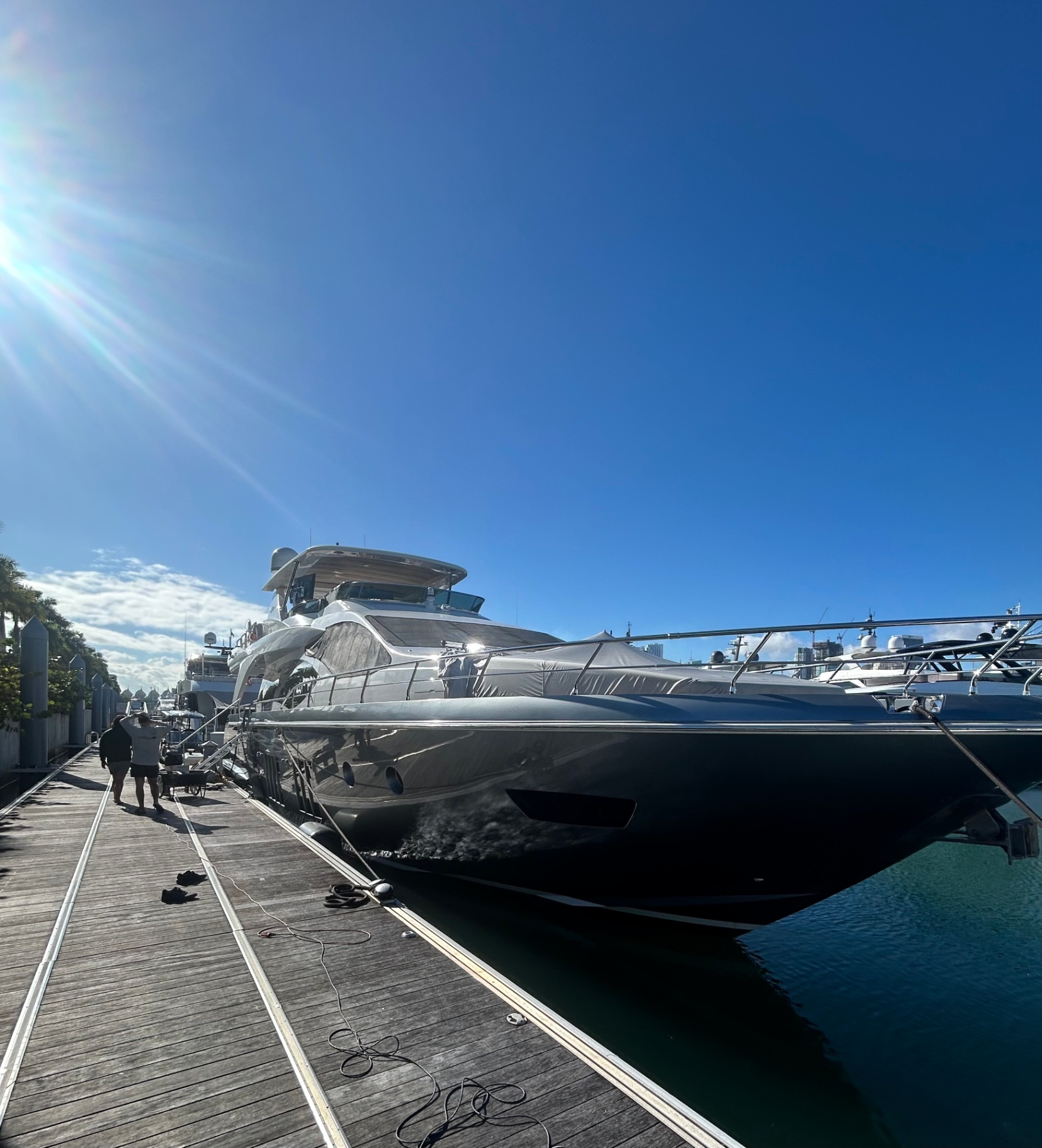
Recent gelcoat restoration work
Ready for gelcoat restoration?
Request a free estimate — most owners hear back within a few hours.