Paint Restoration in South Florida.
Marine paint correction that recovers clarity, depth and mirror-finish reflection.
Multi-stage paint correction designed for marine Awlgrip, Alexseal and 2-part urethane finishes. We remove swirl marks, scratches, oxidation and dock rash, then protect the work with marine ceramic coatings.
About our paint restoration service
Marine paint is not automotive paint. Awlgrip, Alexseal and other two-part linear polyurethanes used on yachts are harder, thinner and far more expensive to replace than a car finish. They reward a careful, measured correction process and punish anyone who treats them like a daily driver.
Our paint restoration starts with a clear conversation about goals and a film-thickness reading on representative panels. From there we build a one-, two- or three-stage correction plan with controlled cut and matched polishes — removing swirl marks, sanding scratches, dock rash, exhaust etching and oxidation while preserving as much of your original paint as possible.
Every restoration is finished with a marine-grade ceramic coating or sealant suited to your usage. The result is a deeper, wetter-looking finish that holds gloss longer, sheds salt and exhaust soot, and dramatically lowers the cost of every future maintenance wash.
What's included
- Safe wet-sanding on clear and tinted paint
- Swirl-free, mirror-level finish
- Black streak and salt etching removed
- Long-term UV, salt and exhaust protection
- Film-thickness measured before any cutting
- Captain and owner walkthroughs at every milestone
Our paint restoration process
- 1Paint inspection & thickness readingWe document existing defects with photos under multiple lighting conditions and take film-thickness measurements so we never remove more clear than necessary.
- 2DecontaminationAcid-free decon wash, iron fallout removal and clay-bar work prepare the surface for safe machine work.
- 3Correction stagesControlled compounding with marine-rated abrasives, refined with mid and fine polishes. Wet-sanding is reserved for deeper defects and only on panels with confirmed thickness.
- 4IPA panel wipe & coatingEvery corrected panel is wiped with isopropyl alcohol to reveal the true finish, then a marine ceramic coating is applied in controlled cross-hatch passes.
- 5Cure & care handoffCoating cures dockside under controlled conditions. We hand off a written aftercare schedule so the finish performs to its rated life.
- Awlgrip and Alexseal hulls showing swirl marks or fading
- Yachts with dock rash, fender lines or exhaust staining
- Pre-survey, pre-sale and pre-charter presentation prep
- Owners committing to a multi-year ceramic protection plan
- Starke Yacht Care marine compounds and polishes
- Starke Yacht Care premium marine wax (alternative to ceramic)
- Starke Yacht Care marine ceramic coatings
- Calibrated paint-thickness gauges (PTG) for safe cutting
Frequently asked about paint restoration
Is wet-sanding safe on my yacht's paint?+
When performed by a trained marine detailer with measured film thickness, controlled wet-sanding is safe and the most effective way to remove deep defects from yacht paint. We will not wet-sand any panel without a paint-thickness gauge reading first.
Will paint correction make my paint thinner?+
Every correction removes a small amount of clear, which is why we measure first. A properly executed three-stage correction typically removes only 2–5 microns of material — paint can be safely corrected multiple times over its life.
How long does a paint correction last?+
The correction itself is permanent — defects do not come back unless re-introduced. Gloss life is determined by the protection layer applied over it: a few months for a sacrificial wax, or approximately 1 to 2 years for a properly maintained marine ceramic coating.
Do I have to ceramic coat after a paint correction?+
No. After correction we offer two protection paths using Starke Yacht Care products: a premium marine wax for owners who prefer a sacrificial layer that's refreshed periodically, or a marine ceramic coating for longer-life protection. We'll walk through both and let you choose what fits the boat and the program.
Can you fix dock rash without repainting?+
Many fender, dock and pole scuffs are surface transfer rather than paint damage. We can remove most of these with compounding and refinish polishing — often saving the cost of a panel repaint.
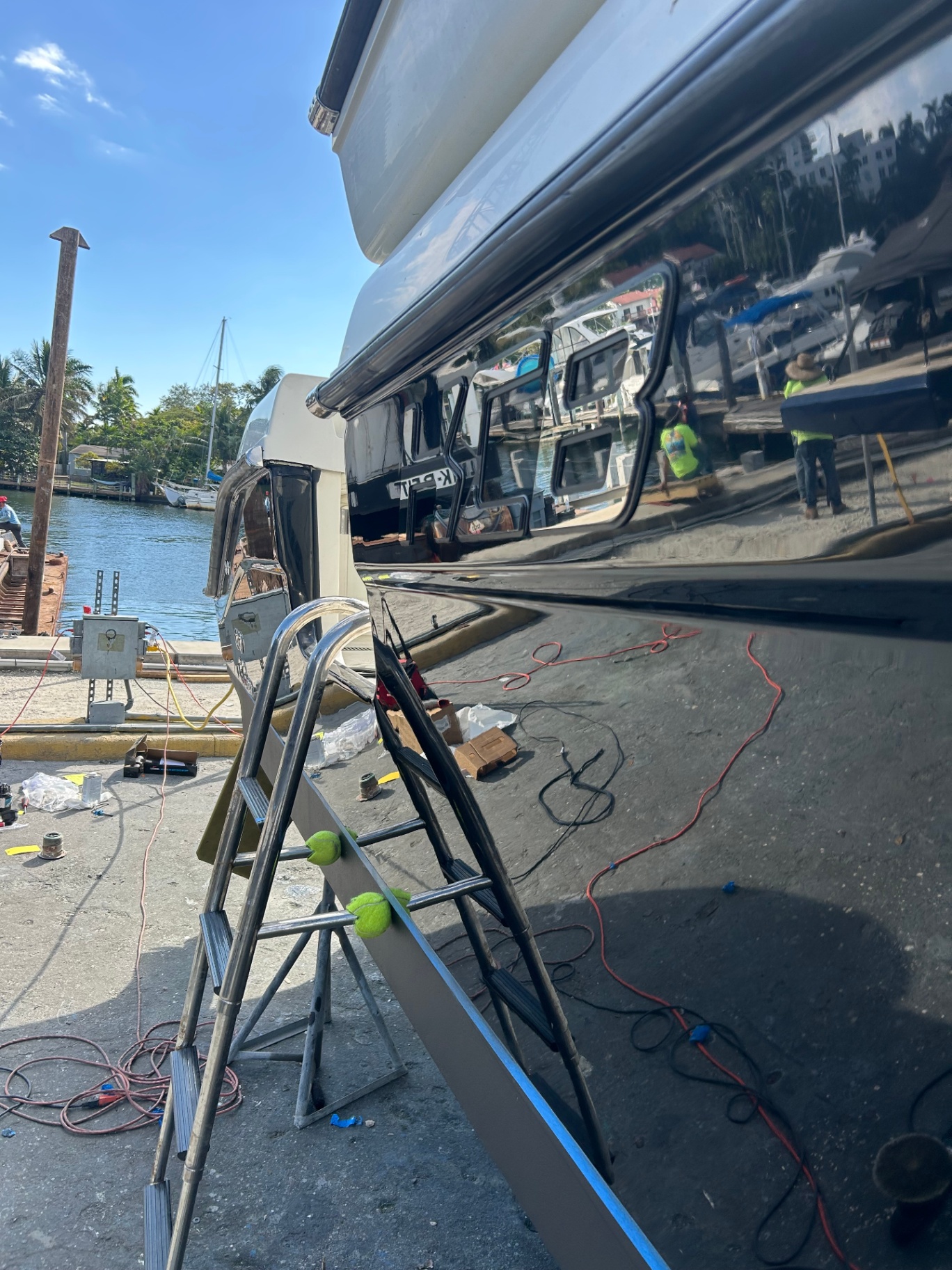
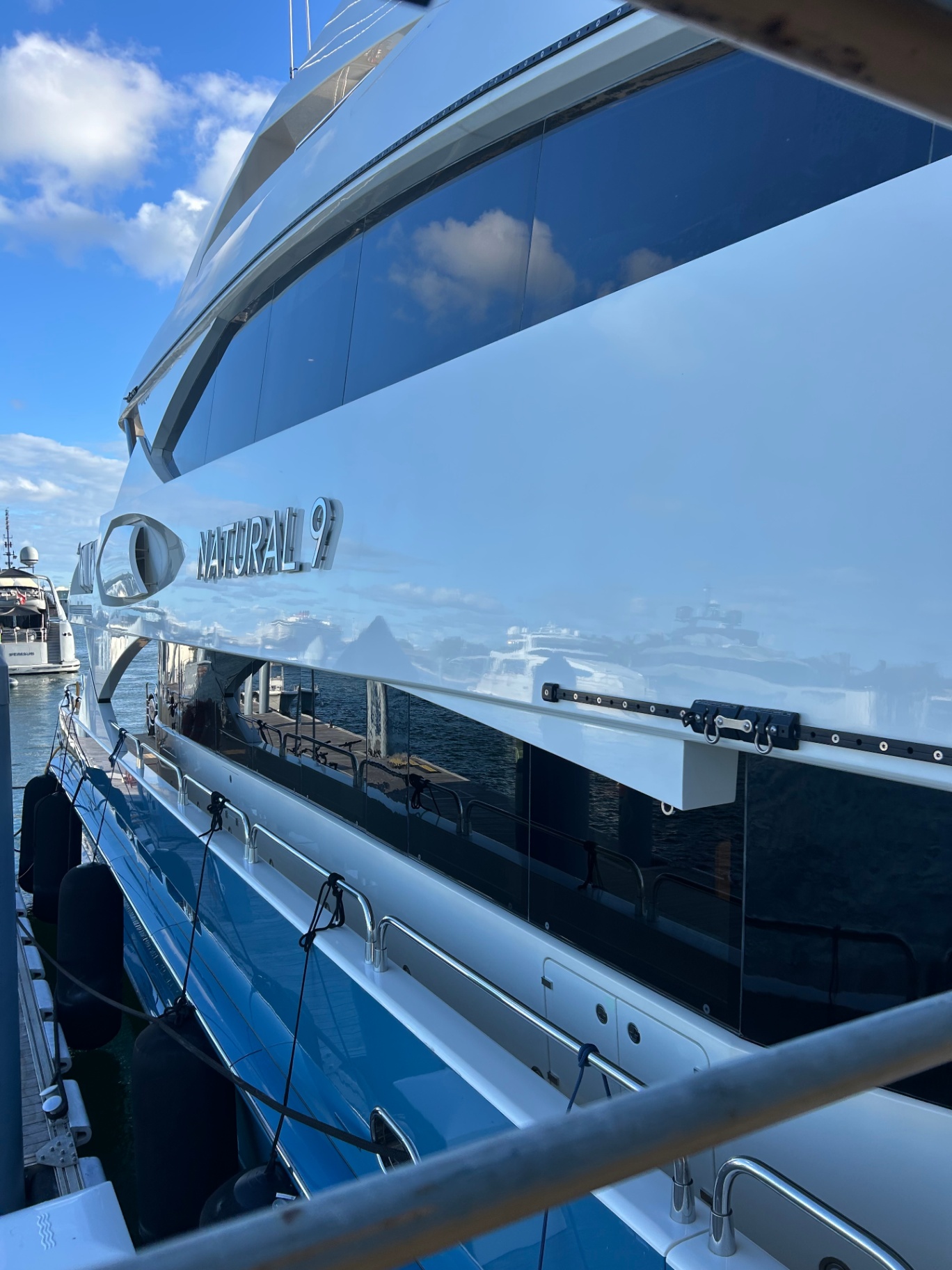
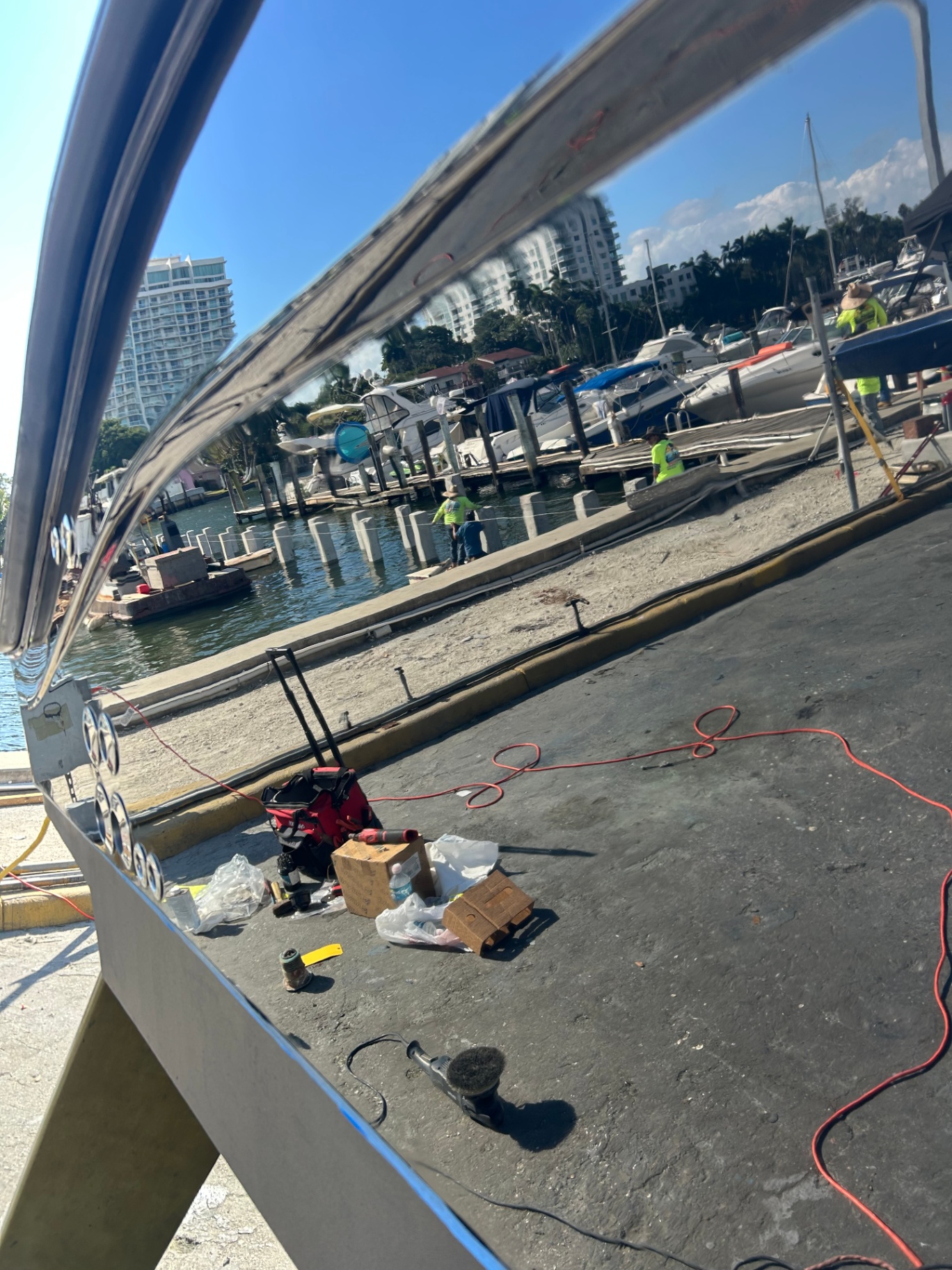
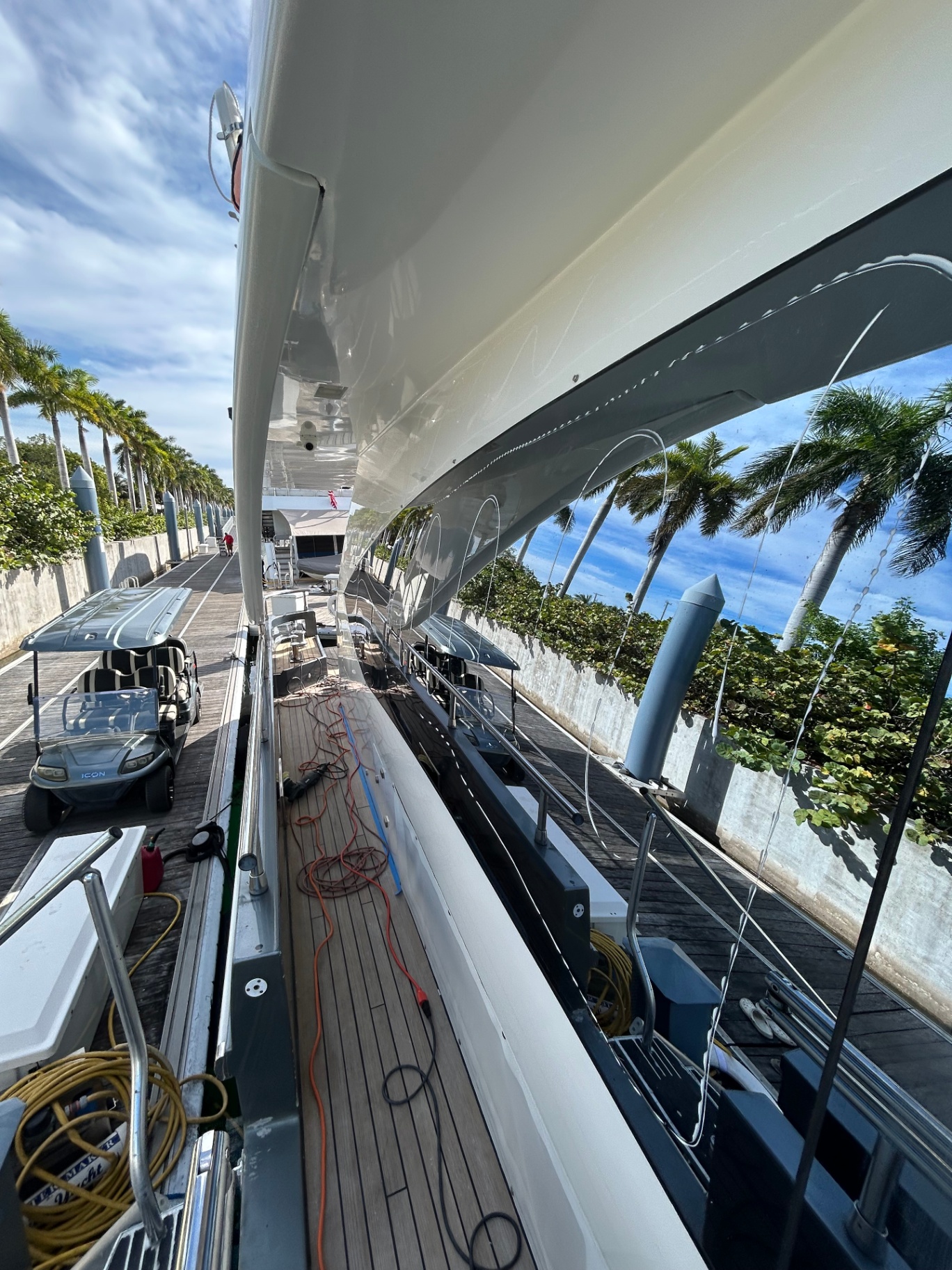
Recent paint restoration work
Ready for paint restoration?
Request a free estimate — most owners hear back within a few hours.